Best Cushion for Hemorrhoids: Donut Pillows & Seat Cushions Ranked
A good hemorrhoid cushion or donut pillow can make the difference between painful sitting and comfortable hours at your desk, in the car, or at home. The right cushion redistributes your body weight away from the perineal area, relieving pressure on hemorrhoids so they can heal. We've compared memory foam, inflatable, and U-shaped hemorrhoid pillows to help you find the best option for your situation.
Quick Comparison
Detailed Product Reviews
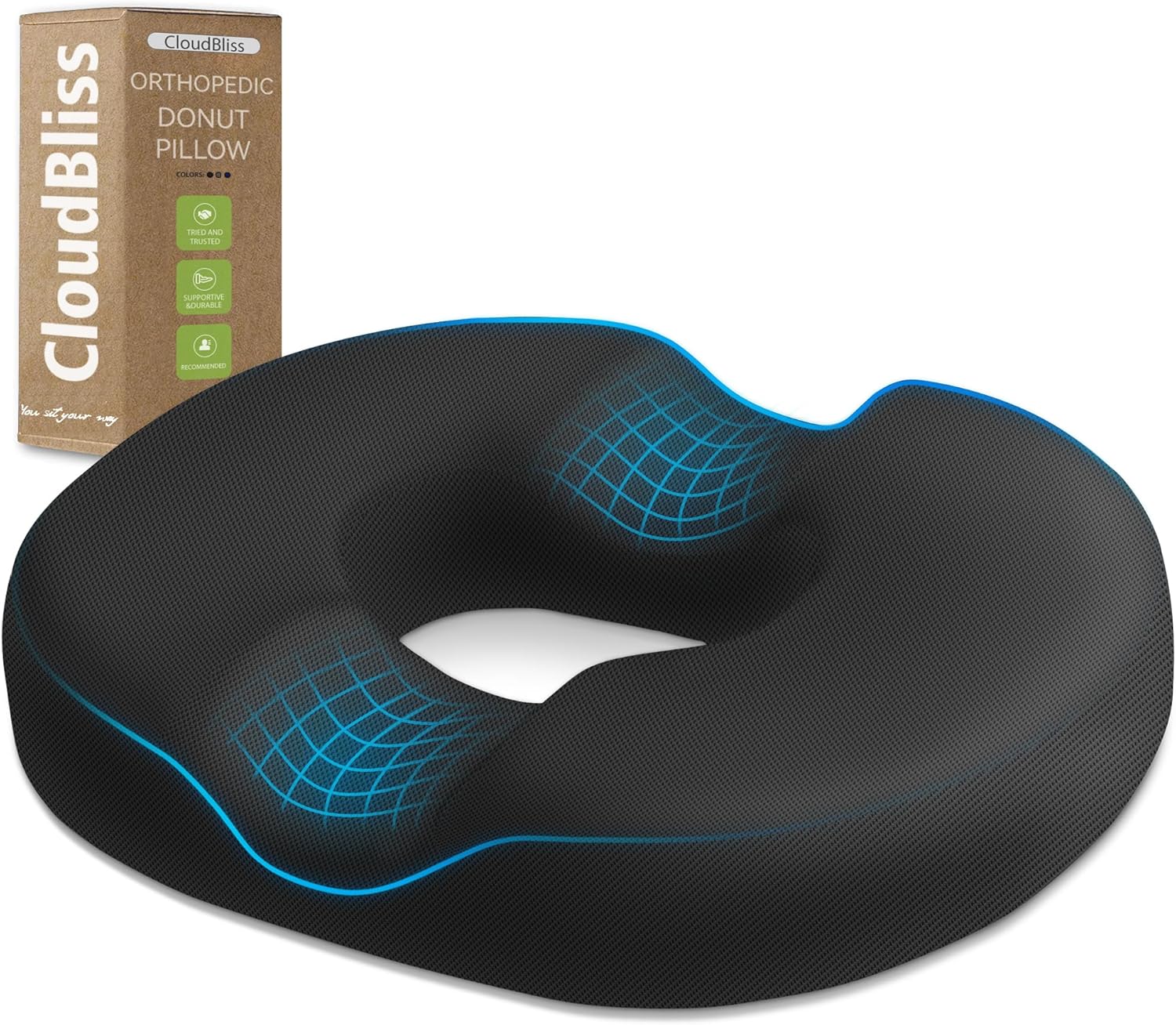
CloudBliss Donut Pillow Seat Cushion
Memory foam donut cushion for hemorrhoid and tailbone relief.
- +Memory foam conforms to body
- +Center cutout relieves hemorrhoid pressure
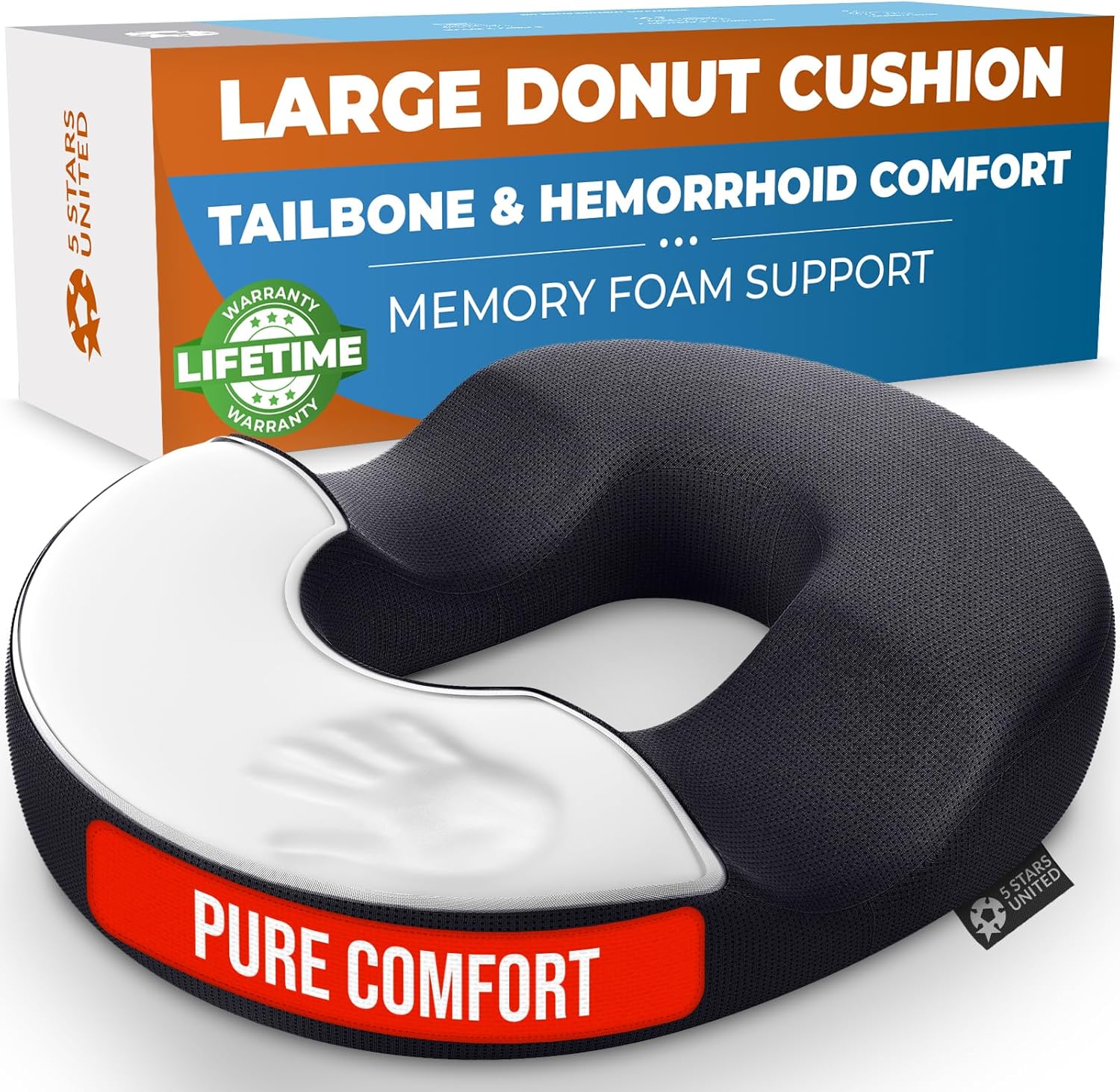
5 STARS UNITED Donut Pillow
Ergonomic U-shaped cutout design for pressure relief.
- +Large size fits most body types
- +Non-slip backing prevents sliding
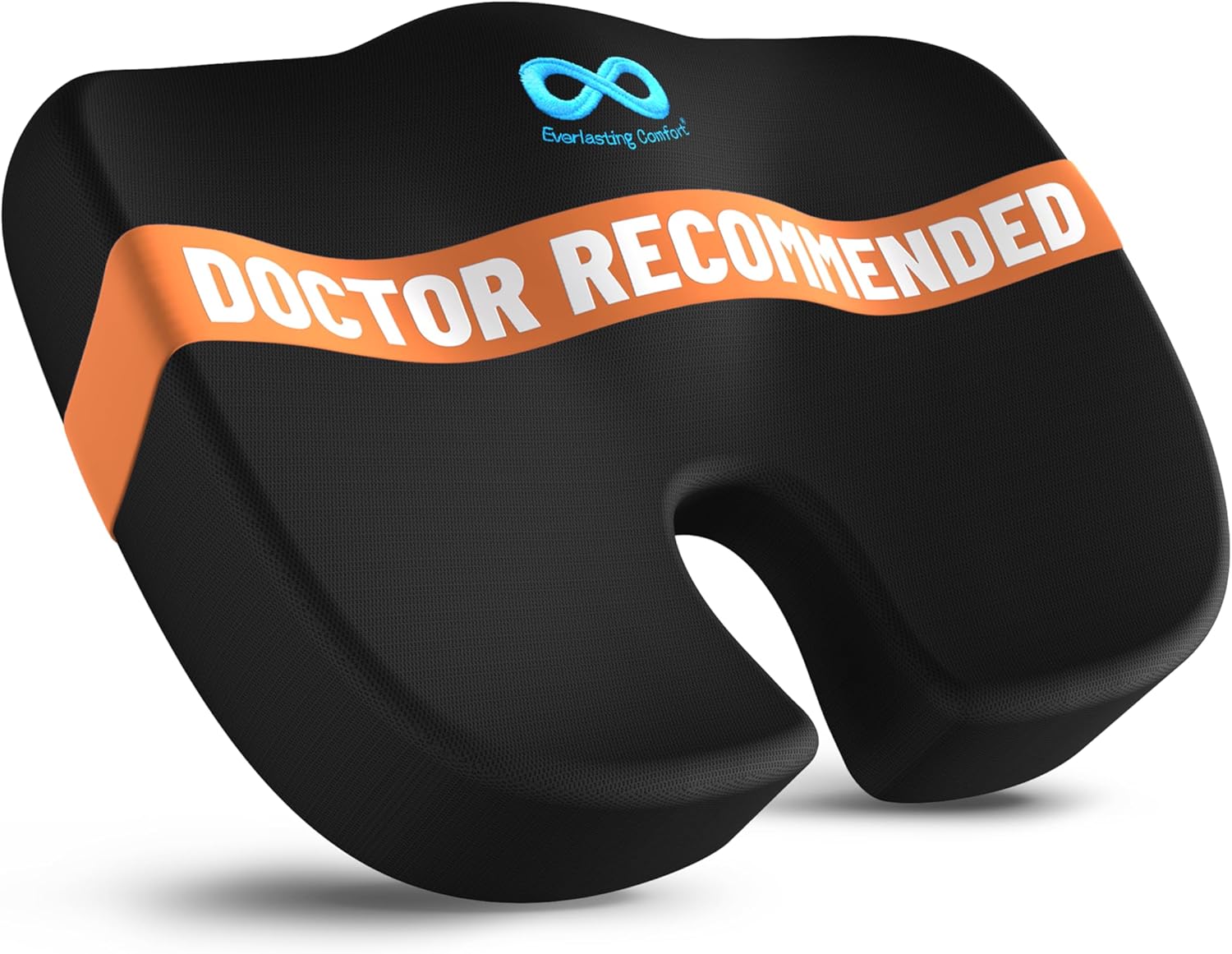
Doctor recommended orthopedic cushion for office and car.
- +Doctor recommended
- +Orthopedic memory foam construction
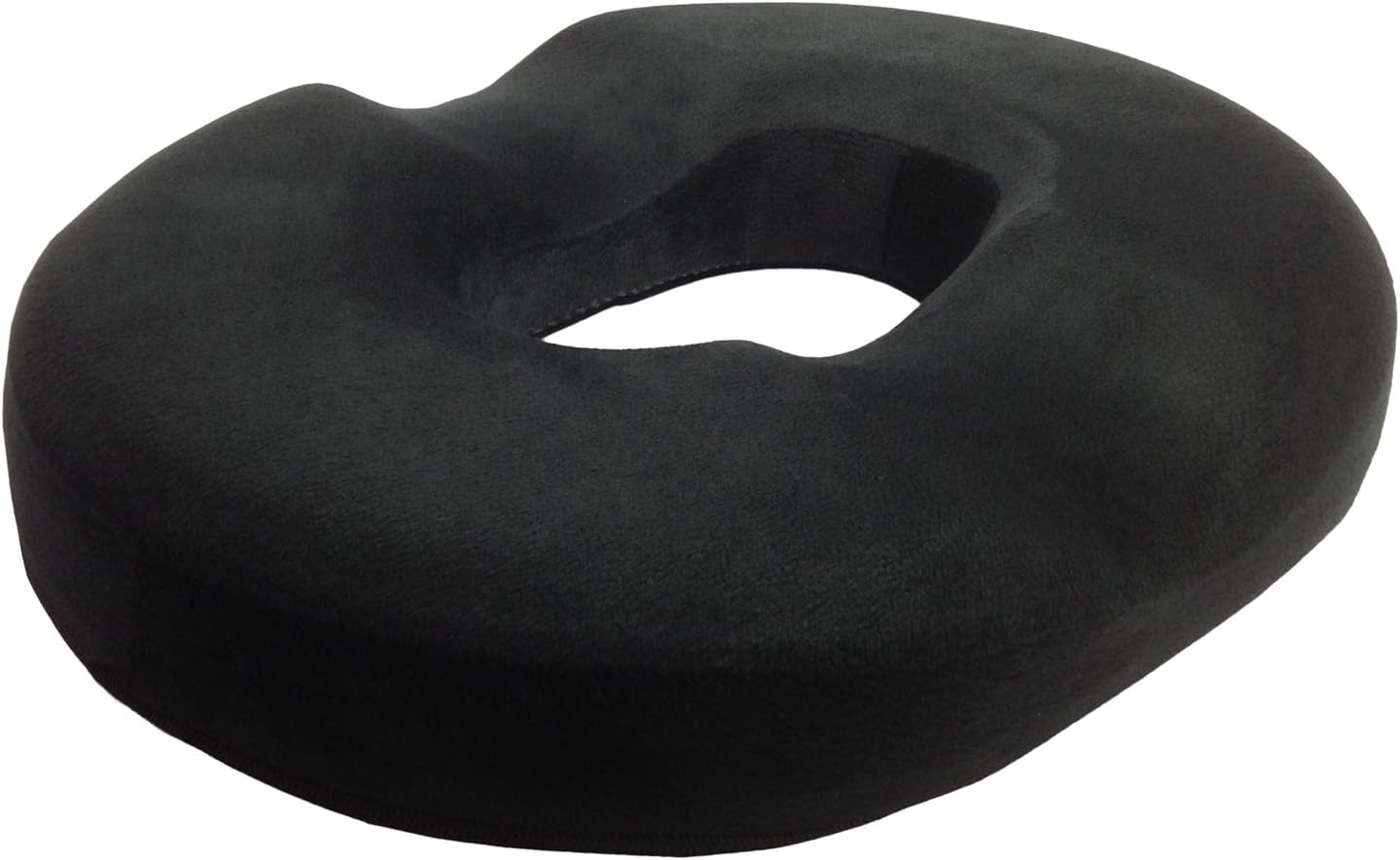
Hemorrhoid-specific donut cushion with dense comfort foam.
- +Explicitly designed for hemorrhoid relief
- +Dense foam resists flattening over time
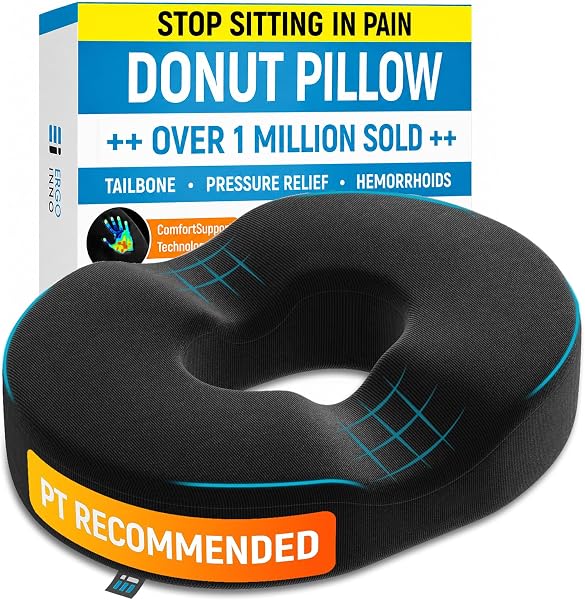
PT ENDORSED Donut Pillow
PT-endorsed memory foam donut cushion for pressure-free sitting.
- +Physical-therapist endorsed design
- +Memory foam holds its shape better than inflatable cushions
Not sure which product is right for you? Our free 2-minute assessment identifies your hemorrhoid type and recommends the best products.
Take the Free AssessmentHow We Evaluate Hemorrhoid Cushions
Hemorrhoid cushions vary more than most people realize. A poor cushion can worsen symptoms by collapsing under body weight and creating more pressure, not less. Our evaluation focuses on whether a cushion genuinely redistributes weight away from the perineal area — the region where hemorrhoids cause the most sitting discomfort.
What We Assess
Pressure Redistribution Design. The critical feature is the center cutout or channel. We evaluate whether the cutout geometry eliminates contact between the sitting surface and the anorectal region, or whether it collapses under weight. For a detailed breakdown of the top designs, see our in-depth donut pillow comparison.
Material and Density. We assess foam density for memory foam cushions (optimal range: 40–60D). Below 40D, the foam bottoms out and the cutout collapses. Above 60D, the cushion feels rigid and does not conform to body contours. For inflatable cushions, we evaluate whether the air chamber provides stable support without shifting.
Durability and Hygiene. We check whether the cover is removable and machine-washable — essential for a product used in a sensitive area. We also evaluate foam resilience over time, since low-quality foam permanently compresses within weeks.
User Feedback. We aggregate verified Amazon reviews from products with a substantial review base, weighting recent feedback within 12 months. We look for consistent reports on actual pain relief, not just general comfort.
Disclosure: We do not conduct laboratory pressure testing. Our evaluation draws on manufacturer specifications, material science data, and aggregate user outcomes. See our review methodology for full details.
The Ergonomics of Hemorrhoid Cushions
When you sit on a flat surface, roughly 75% of your upper body weight concentrates on a small area between your sit bones (ischial tuberosities). If you have a hemorrhoid in that zone, every minute of sitting compresses swollen tissue against a hard surface — which is why sitting becomes the most painful part of having hemorrhoids.
How the Donut Design Works
The center cutout eliminates contact between the sitting surface and the perineal/anorectal region. Your body weight transfers to your thighs and buttocks — areas that can handle pressure without pain. This is the same principle used in post-surgical seating and pressure ulcer prevention in hospital settings.
Memory Foam vs. Inflatable vs. Gel
Memory foam (viscoelastic polyurethane) responds to body heat and weight, conforming to your anatomy over 30–60 seconds. Products like the CloudBliss Donut Pillow and the Everlasting Comfort Memory Foam Cushion use this material for consistent daily support. The PT ENDORSED Donut Pillow pairs firm memory foam with a center cutout for a more traditional pressure-offloading donut design.
Inflatable cushions use adjustable air chambers. Their advantage is customizable firmness — add or release air until the pressure feels right — and they can deflate flat for travel. The trade-off is less stability: air shifts under movement, and the cushion may slide on smooth chairs.
Gel-infused foam adds temperature regulation. Gel absorbs and disperses heat, preventing warmth buildup during extended sitting. This matters less for hemorrhoid relief specifically but improves comfort during long sessions.
O-Ring vs. U-Shape
Full O-ring cushions provide 360° support around the cutout — the most complete pressure relief. U-shaped cushions have an open back, originally designed for coccyx pain. U-shapes are more discreet in office settings but provide slightly less support for posterior hemorrhoids. For hemorrhoid-specific relief, the O-ring design is generally superior.
Do Donut Pillows Actually Help Hemorrhoids?
This is a common question, and the answer is nuanced. Donut-shaped cushions are widely used for hemorrhoid comfort, but not all medical professionals agree on their effectiveness. Understanding both sides helps you choose the right approach.
The Case For Donut Cushions
The center cutout eliminates direct contact between the sitting surface and the perineal/anorectal region. This immediately reduces compression on swollen hemorrhoid tissue, which is why most users report significant comfort improvement on first use. The same pressure-relief principle is used in post-surgical seating and medical-grade pressure injury prevention cushions.
The Concern About Pressure Redistribution
Some practitioners have raised the concern that ring-shaped cushions can concentrate body weight on the tissue surrounding the cutout, potentially increasing pressure on the gluteal and perineal blood supply. The theory is that this redistribution could restrict venous return and worsen congestion in the hemorrhoidal plexus — the opposite of the intended effect.
Practical Takeaway
For most hemorrhoid sufferers, a well-constructed donut cushion with adequate foam density provides meaningful comfort improvement. Products like the Kieba Hemorrhoid Treatment Cushion use denser foam that resists the flattening that undermines cheaper cushions. If a classic ring shape feels uncomfortable or worsens symptoms, consider a U-shaped or coccyx-cutout design that offloads the tailbone area without a full ring. Regardless of cushion type, alternate between sitting and standing every 30–45 minutes when possible — no cushion replaces movement.
Who Benefits from a Hemorrhoid Cushion (and Limitations)
Best Candidates
- Office and desk workers who sit 6+ hours daily. Prolonged sitting is a primary hemorrhoid aggravator, and a cushion directly addresses this. See our guide on sitting strategies for office workers with hemorrhoids.
- Long-distance drivers and commuters. Vehicle seats are typically firm and flat — the worst combination for hemorrhoid comfort.
- Post-procedure recovery. After rubber band ligation or other office procedures, sitting is uncomfortable for 1–2 weeks. A cushion bridges the recovery period.
- Pregnant women in the second and third trimesters, when pelvic pressure makes sitting increasingly uncomfortable. See our pregnancy-safe hemorrhoid treatment guide for safe options to combine with a cushion.
- People with recurring hemorrhoids who want to reduce sitting-related aggravation as part of a long-term prevention plan.
What Cushions Cannot Do
A cushion relieves sitting pressure but does not treat the underlying hemorrhoid. It will not shrink swollen tissue, stop bleeding, or resolve prolapse. Think of it as enabling comfort while other treatments — topical creams, warm water sitz baths, and fiber supplements for softer stools — do the actual healing.
If you have active rectal bleeding, severe pain that prevents sitting even with a cushion, or hemorrhoids that have not responded to home treatment, consult a healthcare provider.
Adapting to Your Cushion: What to Expect
First use: Most users report 50–80% less sitting discomfort immediately. The relief is mechanical — removing pressure from irritated tissue provides instant benefit. Position the cushion so the cutout centers directly under your perineal area.
Days 1–3: You may need to adjust positioning to find the optimal angle. Memory foam cushions feel firmer initially and soften over 2–3 days as the foam responds to your body heat and weight patterns.
Week 1: Sitting tolerance should increase noticeably. Many users can extend comfortable sitting time from 20–30 minutes back to several hours. This does not mean the hemorrhoid is healed — it means the aggravating pressure is removed.
Ongoing use: There is no time limit on cushion use. Many people continue using hemorrhoid cushions preventatively even after symptoms resolve. If hemorrhoids keep returning despite cushion use, the root cause needs addressing. See our guide on whether hemorrhoids resolve without treatment.
Beyond Cushions: A Complete Sitting Comfort Strategy
A hemorrhoid cushion works best as one component of a broader approach. Combining a cushion with these strategies accelerates healing and prevents recurrence.
- Sit-stand alternation. If you have a height-adjustable desk, alternate between sitting and standing every 30–45 minutes. Standing relieves all perineal pressure and promotes pelvic blood circulation.
- Movement breaks. A 2–3 minute walk every hour significantly reduces hemorrhoid aggravation. Gentle movement and targeted exercises improve blood flow without straining.
- Topical treatment before long sessions. Applying a hemorrhoid cream before extended sitting provides additional symptom relief alongside the cushion.
- End-of-day sitz bath. After a full day of sitting, a 15-minute warm soak in a sitz bath increases blood flow and counters circulatory stagnation from prolonged sitting.
- Gentle post-bathroom hygiene. After bowel movements, switch from dry toilet paper to hemorrhoid wipes or a bidet to avoid friction on already-irritated tissue.
- Address the root cause. Fiber supplementation and adequate hydration prevent the straining that causes hemorrhoids. A cushion manages the symptom; fiber addresses the cause.
If sitting remains painful despite a cushion and complementary treatments after 2–3 weeks, consult a healthcare provider. You can compare all relief products to build the right combination for your situation.
Frequently Asked Questions
Related Buying Guides
Comparing your options? Explore our other hemorrhoid product guides:
Related Articles
Learn more about hemorrhoid care with these helpful guides:
Find Your Perfect Treatment
Get personalized product recommendations based on your specific hemorrhoid type.
Affiliate Disclosure: We may earn a commission when you purchase through our links, at no additional cost to you. This helps support our research and content creation. We only recommend products we believe are effective for hemorrhoid relief. Last updated: January 2026.