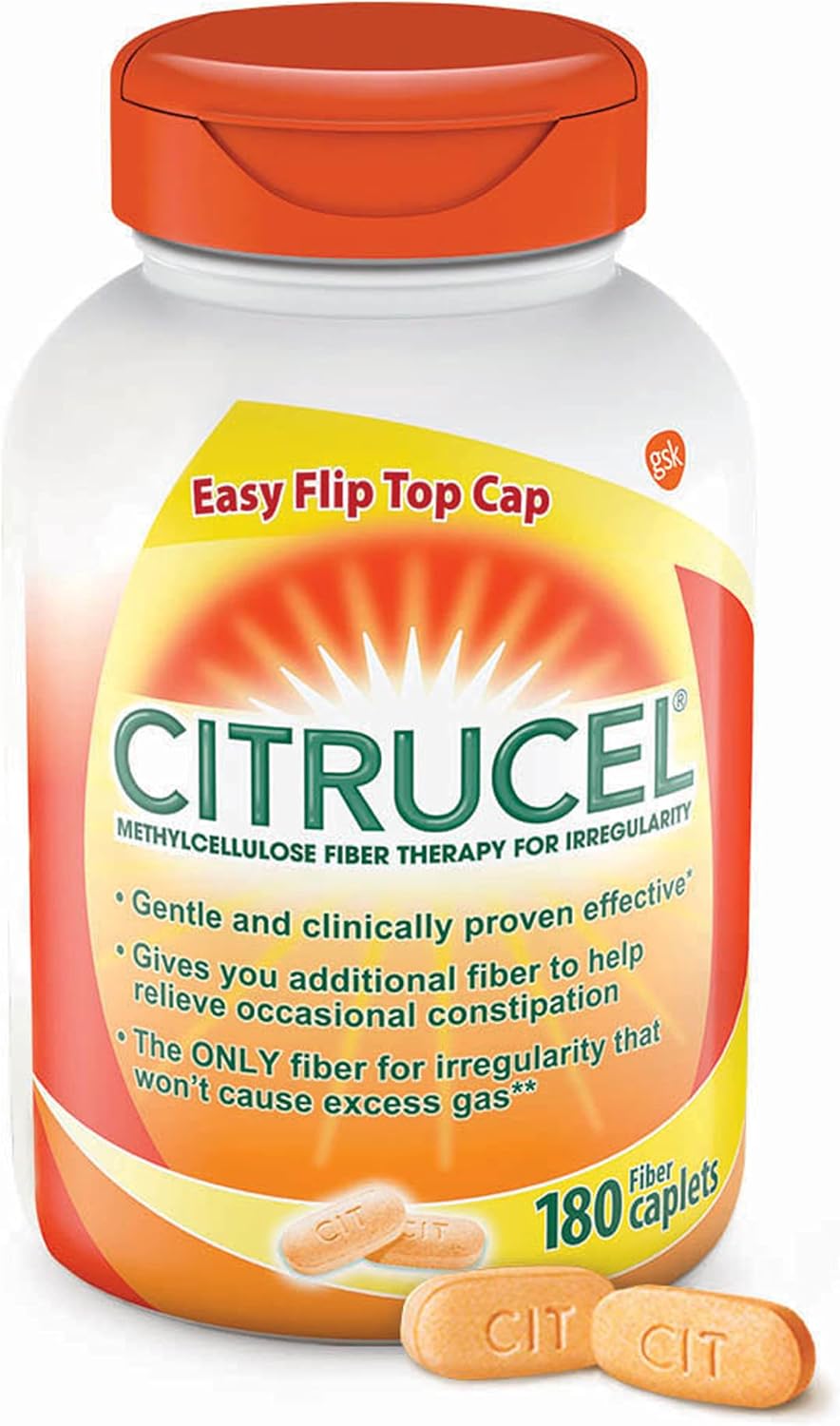
Citrucel Methylcellulose Fiber
Citrucel uses methylcellulose fiber, which is less likely to cause gas and bloating than psyllium. A good choice for those with sensitive stomachs who need fiber supplementation.
Effectiveness by Hemorrhoid Type
Best For
Not sure about your hemorrhoid type? Take our free assessment
Pros
- Less gas than other fibers
- Gentle on sensitive stomachs
- Does not ferment in gut
- Available in powder and caplets
- Gluten-free
Cons
- May be less effective than psyllium
- Takes longer to see results
- Powder has slight taste
Methylcellulose Fiber: The Low-Gas Alternative
Citrucel uses methylcellulose — a semi-synthetic soluble fiber made from plant cellulose. Its defining property: methylcellulose does not ferment in the gut. This single characteristic explains both its primary advantage (less gas) and its limitation (less prebiotic benefit).
Why Less Gas Matters
Gas and bloating are the #1 reason people abandon fiber supplements. Psyllium and wheat dextrin are partially fermented by gut bacteria, which produces gas as a byproduct. This is normal and typically resolves in 1–2 weeks, but some users never fully adjust. Methylcellulose bypasses this entirely — it passes through the gut without bacterial fermentation, forming a gel that softens stool without producing gas.
For hemorrhoid patients who've tried Metamucil or Benefiber and found the gas intolerable, Citrucel is the standard recommendation. See our fiber type comparison for a detailed side-by-side.
Gluten-Free
Unlike Benefiber (wheat-derived), methylcellulose is made from plant cellulose and contains no wheat, gluten, or grain products. This makes Citrucel the best choice for celiac patients and those with non-celiac gluten sensitivity who need hemorrhoid fiber supplementation.
Who Citrucel Is Best For (and Its Limitations)
Best Candidates
- Users who experience gas and bloating from other fiber supplements. This is the #1 reason to choose Citrucel. If psyllium or wheat dextrin causes persistent discomfort, methylcellulose likely won't.
- IBS patients with hemorrhoids. IBS often involves heightened gut sensitivity. A non-fermenting fiber reduces the risk of triggering IBS symptoms while still softening stool.
- Celiac or gluten-sensitive users. The only gluten-free mainstream fiber supplement in our review set.
- Recurring hemorrhoid patients who need long-term daily fiber but have abandoned other supplements due to side effects. See our prevention guide.
Limitations
- Potentially less effective than psyllium. Some studies suggest psyllium produces better stool consistency outcomes than methylcellulose, likely because psyllium forms a more viscous gel. The difference is moderate, not dramatic.
- Slower onset. Users may need 5–7 days of consistent use before noticing significant stool softening, compared to 2–3 days for psyllium.
- No prebiotic benefit. Because it doesn't ferment, methylcellulose doesn't feed beneficial gut bacteria — the "no gas" advantage comes at the cost of no prebiotic effect.
How to Take Citrucel and What to Expect
Dosing
- Powder: Mix one heaping tablespoon in 8 oz of cold water. Stir well and drink promptly. Available in orange flavor and sugar-free variants.
- Caplets: Take 2–4 caplets with 8 oz of water, up to 6 times daily. Caplets avoid the taste issue entirely but require multiple pills per serving.
- Start at half the recommended dose for the first 3–5 days, even though methylcellulose causes less gas. Gradual introduction is standard practice for all fiber supplements.
- Drink at least 8 oz of water per serving — the same hydration requirement as all fiber products.
Timeline
Mild stool softening begins within 48–72 hours. Full effect develops over 5–7 days of consistent use. The slower onset reflects methylcellulose's less aggressive gel formation. Once established, the effect is consistent. Daily use for hemorrhoid management is standard — the benefit accumulates over time. See our complete fiber diet guide for complementary dietary strategies.
Side Effects
Side effects are rare with methylcellulose. Mild bloating is possible during the first few days but significantly less common than with psyllium. The primary risk — as with all fiber — is constipation from inadequate water intake. Always drink more water when supplementing with fiber.
Alternatives, Value, and Our Assessment
Alternatives
- Metamucil (psyllium) — Stronger evidence, more fiber per serving, but causes more gas. Best for users who tolerate it well.
- Benefiber (wheat dextrin) — Dissolves invisible with no taste. Moderate gas potential. Contains wheat. Best for stealth supplementation.
- Colace (docusate sodium) — Not a fiber supplement. Fast-acting stool softener for acute situations. Best combined with Citrucel during flare-ups.
Price and Value
For approximately 42 servings (powder), Citrucel's per-serving cost is slightly higher than Metamucil and Benefiber. The premium reflects the specialized formulation. The caplet form is comparably priced. For the full fiber category, see our fiber buying guide.
Our Assessment
Citrucel is the best fiber supplement for gas-sensitive users and those with gluten restrictions. The thousands of positive Amazon reviews confirm reliable quality for a niche that other fibers don't serve well. It's not the most potent fiber option — psyllium holds that position — but it's the one most likely to be taken consistently by users who've struggled with other fibers.
The bottom line: the best fiber supplement is the one you'll actually take every day. If gas has been your barrier to daily fiber, Citrucel removes that barrier. Slightly less potent per serving, but far more potent than zero servings of a supplement you abandoned.
Best Fiber Supplement for Hemorrhoids
Compare all top-rated fiber supplements in our buying guide.
Related Articles
Frequently Asked Questions
Compare Similar Products
Metamucil Psyllium Husk Fiber Supplement
Psyllium fiber supplement to soften stool and reduce straining.
Benefiber Daily Prebiotic Fiber
Taste-free fiber that dissolves completely in drinks.
Colace Stool Softener Capsules
Gentle stool softener for easier bowel movements.
Not Sure If This Is Right For You?
Take our free 2-minute assessment to identify your hemorrhoid type and get personalized product recommendations.
Take the Free AssessmentAffiliate Disclosure: We may earn a commission when you purchase through our links, at no additional cost to you. This helps support our research and content creation. We only recommend products we believe are effective for the hemorrhoid types we've identified. Last updated: January 2026.